︎︎︎ Escaping the Spiral: Music Media’s Vicious Cycle of Exploitation, and How We Break It
“The cultural worker of today has to figure out how to sustain themselves materially while doing the work that they care about.”
“The cultural worker of today has to figure out how to sustain themselves materially while doing the work that they care about.”


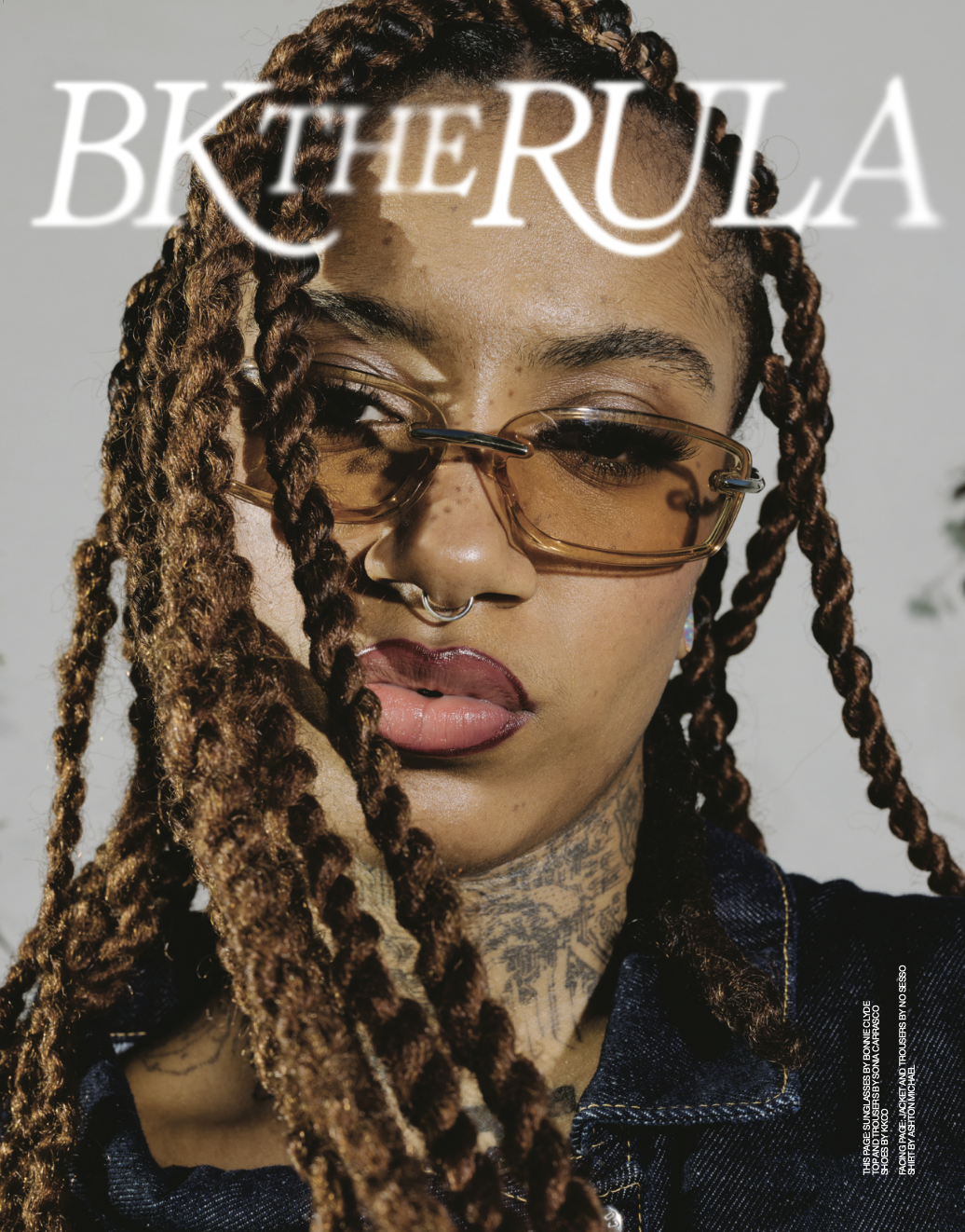
︎︎︎ Bktherula
“My best songs are usually the ones that I feel the best when I'm making them. It's like a specific chill that I feel up my spine … it ends up being fucking insane.”
“My best songs are usually the ones that I feel the best when I'm making them. It's like a specific chill that I feel up my spine … it ends up being fucking insane.”
BRICK MAGAZINE/SPRING 2024/COVER STORY/10PGS
![]()
![]()
![]()
![]()



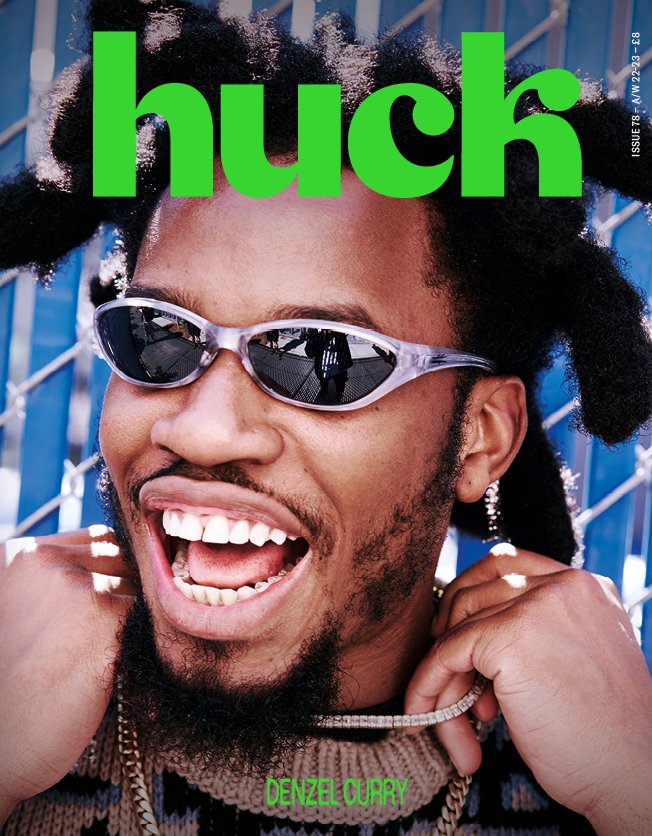
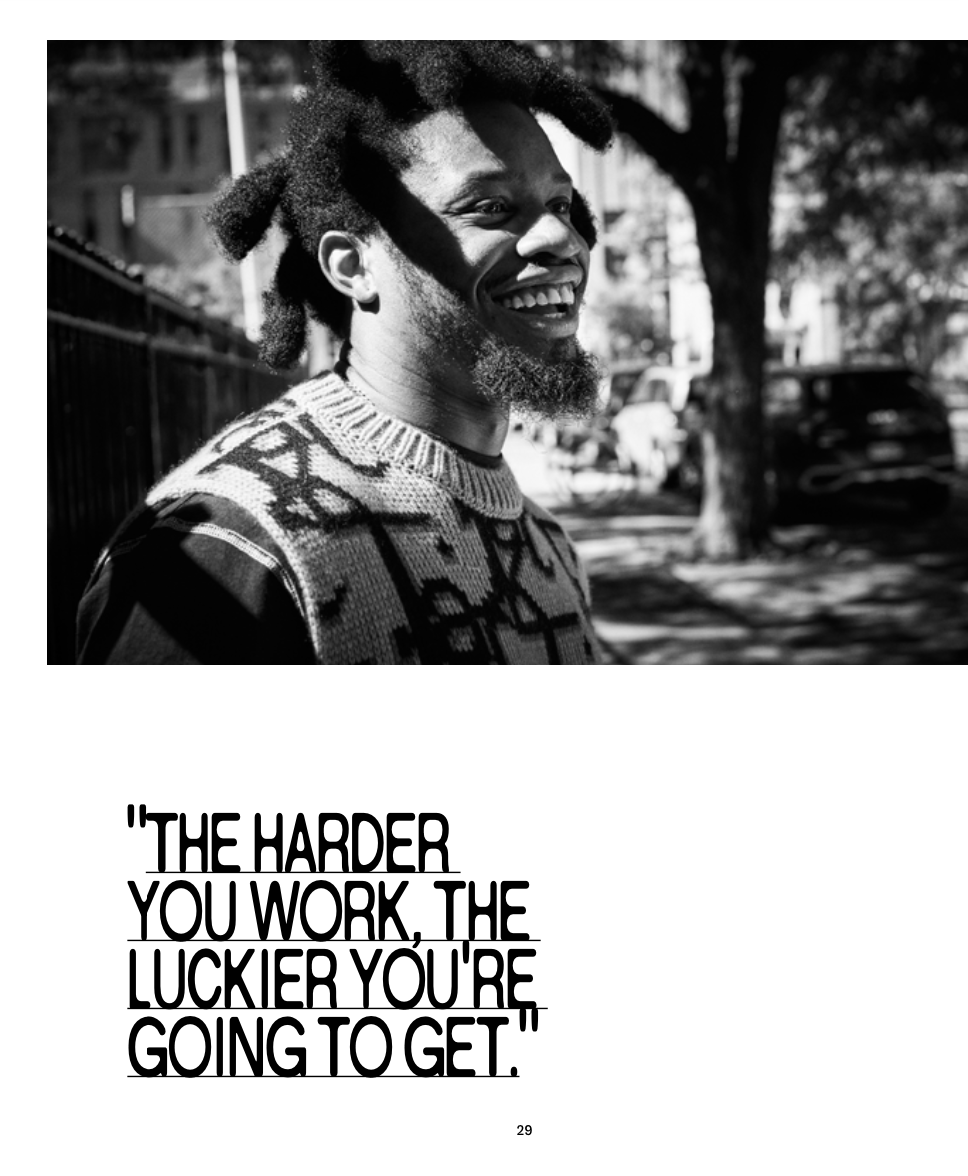
︎︎︎Denzel Curry
“If you’re a constant threat, people are going to be intimidated by you. They’re going to try to sabotage you every step of the way. The best has always gotta worry about what a threat is going to do.”
“If you’re a constant threat, people are going to be intimidated by you. They’re going to try to sabotage you every step of the way. The best has always gotta worry about what a threat is going to do.”
HUCK MAGAZINE/SPRING 2022/COVER STORY/10pgs
![]()
![]()
![]()

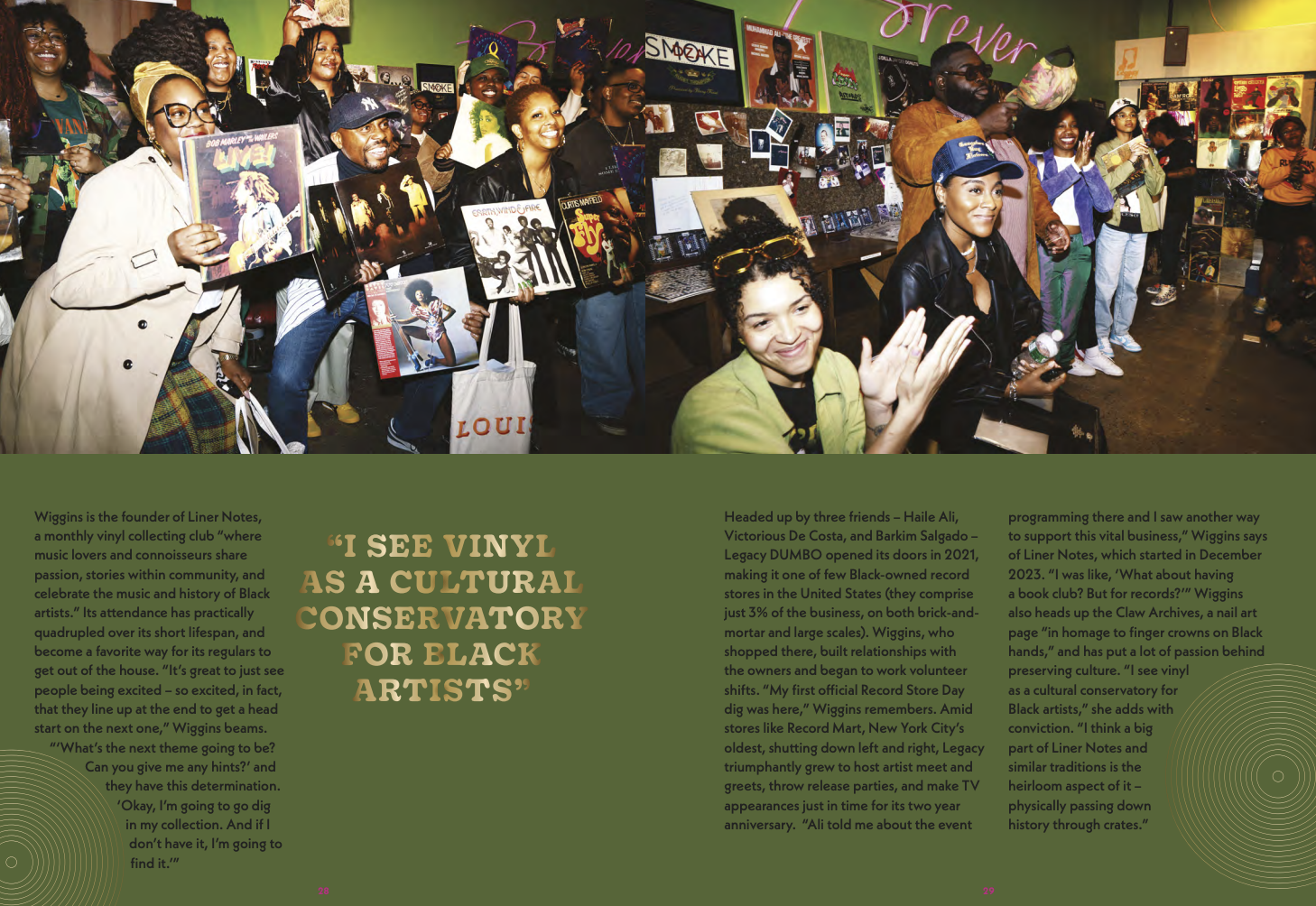
︎︎︎ Liner Notes Vinyl Club
“People like to talk about music, but sometimes they don't have the space to nerd out. Music is everywhere, but its’s also a treasure that you have to open
your mind to.”
“People like to talk about music, but sometimes they don't have the space to nerd out. Music is everywhere, but its’s also a treasure that you have to open
your mind to.”
RALPH MAGAZINE/FALL 2024/FEATURE/12PGS
![]()
︎︎︎Lil Durk
“Drill’s becoming fun again. And it ain't the end. You can keep going and make a whole ‘nother genre or another a whole ‘nother power move. It’s about how the world continues to do it.”
“Drill’s becoming fun again. And it ain't the end. You can keep going and make a whole ‘nother genre or another a whole ‘nother power move. It’s about how the world continues to do it.”
BRICK MAGAZINE/SPRING 2021/COVER STORY/12PGS
![]()
![]()
![]()
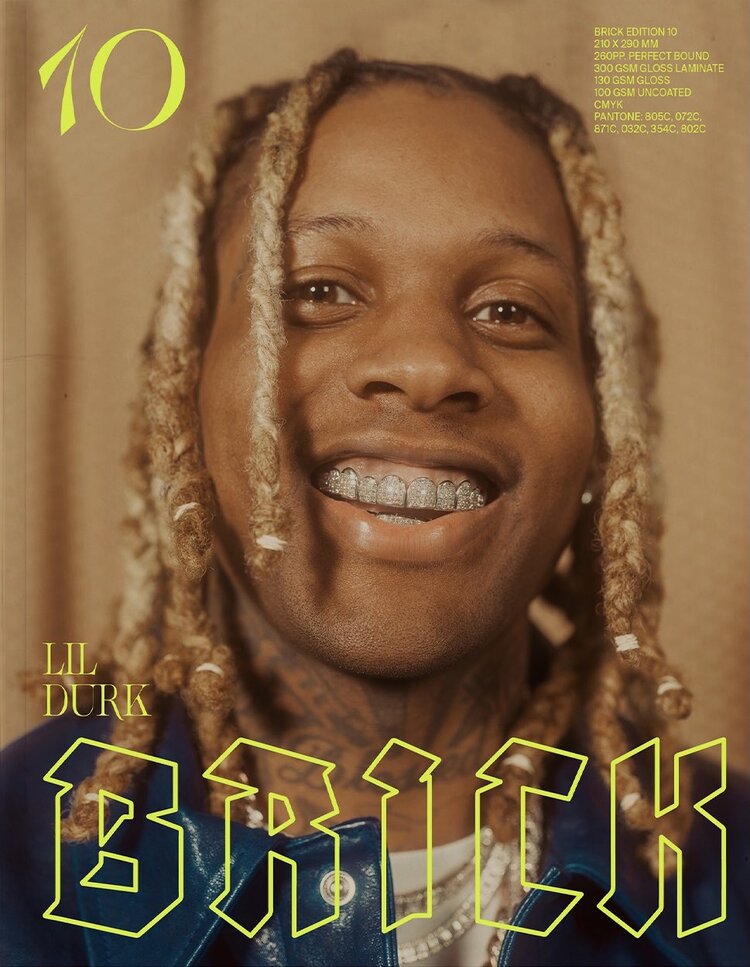
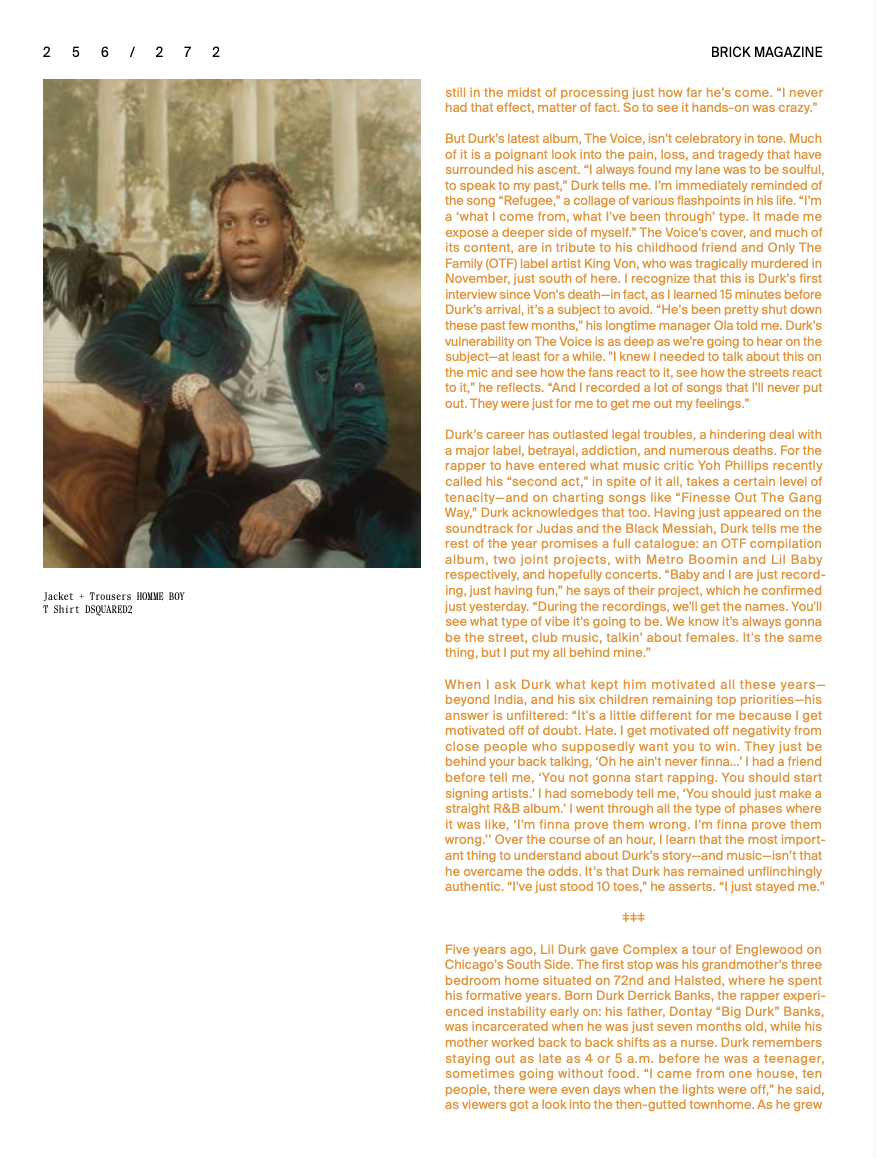

︎︎︎ Stories Cast in Gold: Documenting the Nameplate
“Our political interests are to unpack and explore and reveal the types of biases that pop up in aesthetic judgments of nameplates.
“Our political interests are to unpack and explore and reveal the types of biases that pop up in aesthetic judgments of nameplates.
BRICK MAGAZINE/SPRING 2024/FEATURE/10pgs
![]()

︎︎︎KEY!
“I would’ve done nothing different. If I did anything differently I would’ve been the biggest artist in the world. And I still strive to be.”
“I would’ve done nothing different. If I did anything differently I would’ve been the biggest artist in the world. And I still strive to be.”
BRICK Magazine/Fall 2019/Feature/14PGS
![]()
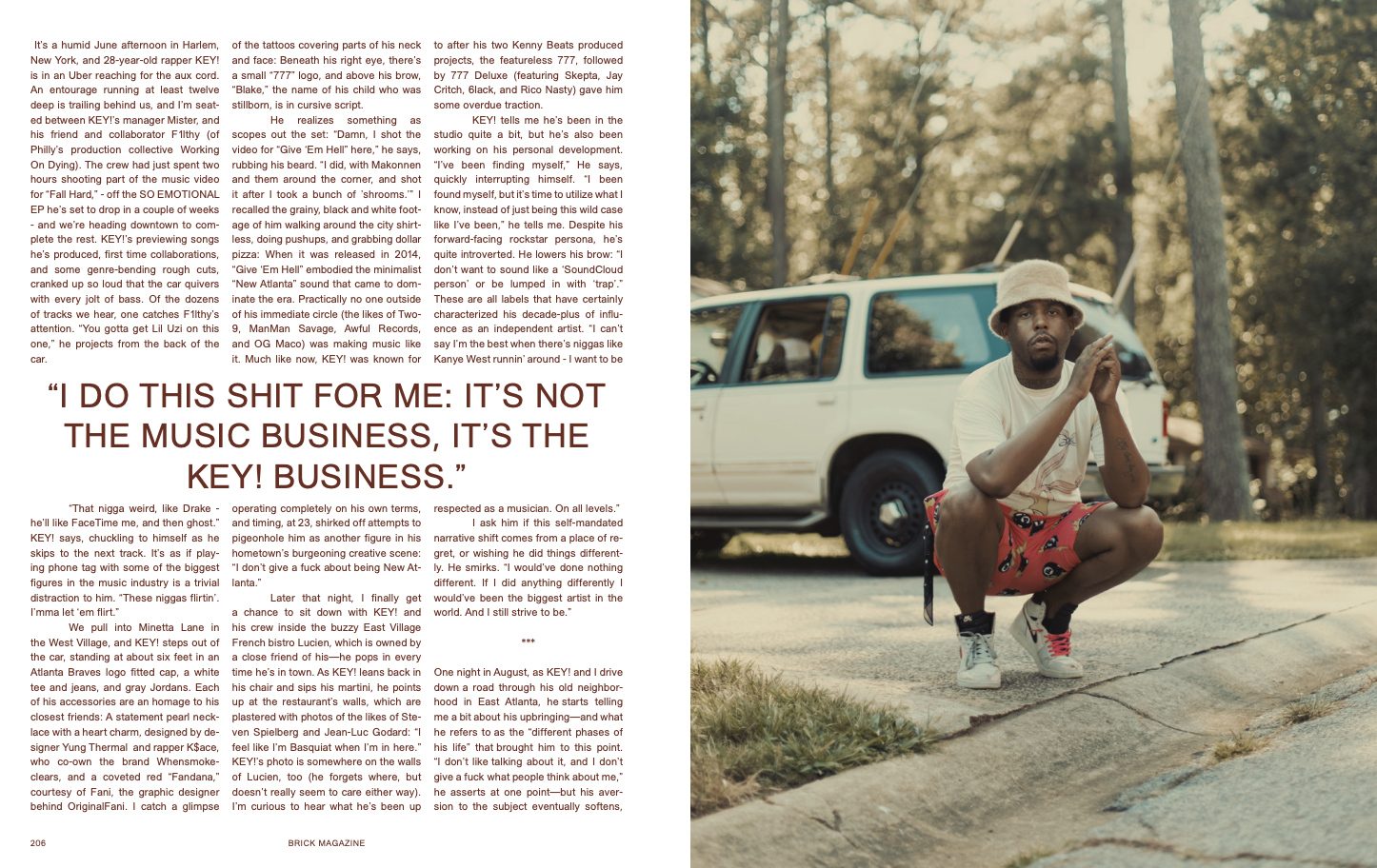
Escaping the Spiral
MUSIC MEDIA’S VICIOUS CYCLE OF EXPLOITATION, AND HOW WE BREAK IT
By Timmhotep Aku and Atoosa Moinzadeh
PUBLISHED FALL 2026/LINER NOTES: A CRITIC’S NOTEBOOK/CRITICAL MINDED
PUBLISHED FALL 2026/LINER NOTES: A CRITIC’S NOTEBOOK/CRITICAL MINDED
LOW WAGES, precarious employment, dwindling readership, and increasingly devalued labor: It’s clear that music criticism as a profession is in crisis, but what’s not so clear is how we got here and what can be done about it.
With these questions in mind, two music writers from different generations, Timmhotep Aku and Atoosa Moinzadeh, sat down to discuss the state of the art and industry. Their perspectives are not only informed by the eras in which they began their careers (the early aughts and the 2010s, respectively) but also by socioeconomic class and their racial, ethnic, and gender identities. Both working class and non-white— Moinzadeh is an Iranian-American woman and Aku is a Caribbean-American man of African descent (read: Black) — their marginalized identities inform not only their experiences but also how they understand the responsibilities of cultural critics to society writ large.
Neither of these cultural workers have the luxury of accepting the anti-labor changes in the industry as irresistible, irrefutable, or irreversible acts of God or nature. In truth, these deliberate and often arbitrary business decisions are made by people and institutions bent on disempowering workers to maximize profit. According to a Critical Minded 2026 report, roughly half (49%) of pop music critics reported earning $5,000 or less per year from music criticism. That same number of pop music critics also reported earning $90,000 or less annually in household income, suggesting other streams of income are essential to survival.
Zooming out, the Poynter Institute estimates there has been a 75 percent decline in the number of local journalists per 100,000 of population in the U.S. since 2002. This contraction results in declining media literacy and social alienation: Northwestern’s University’s Medill School of Journalism found that, as of October 2025, 50 million Americans have limited to no access to local news. For Liner Notes, Aku and Moinzadeh focus in on latestage capitalism, the question of who the cultural worker serves, media companies subsuming the worker, and beyond.
This conversation has been edited and condensed for clarity.
‡‡‡
Who Do You Serve?
TIMMHOTEP AKU: How do you personally define cultural journalism and criticism?
ATOOSA MOINZADEH: As cultural workers we're tasked with the greater responsibility to understand, critique, contextualize, and archive art and its respective movements, which includes unearthing what it says about the larger human condition. Archiving is about making sure that we're documenting trends, voices, and movements within culture, art, and music. Whether that's through an interview or a field report, we make sure that first-person, organic perspectives are preserved and expanded upon. We're also iterating off of each other.
For me, as a music journalist who primarily focuses on hip-hop, I think this work operates the same way the genre does: we're taking this thing, we're flipping it, we're making it into something new. Sometimes we’re reintroducing it into the conversation. Sometimes, we’re explaining how a newer piece of work is in conversation with an older piece of work. We're kind of operating from similar principles through our documentation.
TA: You said a lot of really important words that keep on coming up in my conversations with writers these days—especially as so much news, history, and generally, information, is being decontextualized. There is so much erasure that's happening in terms of histories. You said, “documenting,” you said “archiving,” you said “contextualization,” you said “reporting.” When I think about my role as a cultural worker who happens to write, to edit, to be a critical voice, I look at those things as the bedrock of what I do. And I understand that people lose the meaning of that word “media”, which literally means we’re the intermediary between the general public and these phenomena that we cover via our reporting and our criticism.
My attitude towards music criticism, and generally cultural criticism, is that it must be performed with a sense of duty. I am in service to the people who are the audience. I think oftentimes that gets blurry and some people think they're there to exert authority as opposed to act in service of said audience. For me, that's never really been a thing that's appealing. We’re here to put things into context for people so that they understand the full breadth of what that thing is and then make the decision of whether and how they engage with said phenomenon.
AM: I feel like what you just said made me think a lot about another important question: Who do we serve? I've always viewed journalism as service. We live in a world where we have to frequently question the motivations of those who call themselves journalists: Who is this person trying to serve? Because I've noticed there are people who are self-serving. Then there are people who are serving a larger entity, whether it's a record label, or a brand, or an artist. I think that's a line that gets muddied a lot. They have an aim, to quote you in many of our other conversations, to protect or preserve something called “status quo.” You invoke the status quo a lot when you question power structures, and I think that that phrase is something to think about and center in this conversation. We’re talking about what the status quo is and how it hasn’t served us or the greater public. We need to ask ourselves: How do we challenge the status quo? How do we change the predominant default culture around not just music itself, but how people consume it and how they engage with it?
TA: As people who come from marginalized identities, our critical intervention is going to be different than that of those who benefit most from upholding the status quo. That means that we are engaging with this art to tell these stories that are often untold or told without important nuance. We're adding a layer of nuance that, for lack of a better term, humanizes and gives the full breadth and personhood to the subjects that we're covering. The fake objective view of things — the view from nowhere, they call it — tends to privilege status quo perspective, even though it says it has no bias to it.
Part of the duty I feel I have is to make the reader not only more knowledgeable, but more literate and discerning. And that comes from nuance. It's not just referencing whatever rapper I wrote about at a dinner party, it's about engaging with whoever this rapper is, understanding what the milieu is from which they come from, and then having that speak to a greater truth being told about our society in general. Not just like a fun fact, but a humanizing fact, I guess.
The Culture of Work
TA: The media industry is extremely classist. There's a high barrier to entry for people who don't come from the highest rungs of society as it pertains to socioeconomic status. I think there was a blip in which people could kind of get in and there was this abundance that you were talking about a decade ago. Where you had all these different platforms, and if you could write and knew about the subject , you might’ve had a shot. I think the way things have developed has become exclusive in a very, very sinister way. This is no longer the domain or a place where a working class person can enter and prosper. I come from a working class background and this was a viable thing in which I could enter without having whatever elite pedigree to guarantee entry, but I think that's not the case anymore.
The cultural worker of today has to figure out how to sustain themselves materially while doing the work that they care about, and with the understanding that the industries at play don't have their best interests in mind now, and possibly never have. You have to figure out what to do with that and if it's worth exerting the amount of passion and attention and time it takes to do the work. I think it's all right for us to admit that many of the powers that be in the media industry are no longer in the business of providing contextualization or useful information. They're in the business of sensation.
AM: Agreed. These publications also operate from a place of knowing that they need us and our expertise. They need our track records and the level of trust we've cultivated with readers. Yet at the end of the day, the goal is to extract that labor: to absorb what the critic or the journalist brings into their ecosystem and then dispose of that individual when and how they see fit. They then assume that legacy or that intellectual property as theirs. Decontextualizing the work and abstracting it from the source.
TA: Yes. People are being subsumed into brands. The brands, they benefited by getting the right people at the right time, to lend them credibility, to give them their cachet. But will also chew you up and they spit you out. I've seen this happen to people who work for the most prestigious media brands. I think the only way that we resist that is by doing our own thing and building power. I think that word has to come up in this conversation a lot more.
All the things I'm talking about are ways for us to have leverage and more power. If we don’t build power for ourselves,we'll never have the ability to collectively bargain, and we'll never have terms that land on our end. Because of the nature of the industry now, I feel myself being coerced into a type of thought and a type of reactiveness that is antithetical to my purpose for being here.
AM: I often feel the same way.
TA: There are times when I’m feeling insecure about it and asking myself, oh, Why am I not adapting to it? And then I had to do some soul searching and be like, oh no, because this shit is actually anti you. This is anathema to you because it should be. And that leads me kind of to a larger point that you touched on and what you said. Systems create behavior. Systems corral us into behaviors and ways of thinking and suddenly into ideologies.
When I talk to some of my younger colleagues and peers, all they know is cranking. I feel a little bit of sadness, but I also understand that this is the behavior they've been corralled into. When I think of the scarcity mindset that leads to competition over crumbs, I understand that as part of system behavior. We're all being kind of corralled into these behaviors that make our work less valuable, and deprioritize our mental and physical health. That's another trend I've seen: people who do the work that we're doing going insane and having mental health issues that go unaddressed, because they have to keep up with the pace of an industry that does not give a fuck about their health.
AM: Exactly. Is it more about preserving your integrity and making meaningful work? Or is it about the accolades, even if it means being absorbed into a system that doesn’t care about you? I'm constantly asking myself, Am I having a hard time adapting or is this just in conflict with my values? I see the new cycle and the accelerating churn as it pertains to music, but then I realize, I’m a curious thinker, and the current climate is antithetical to curiosity. If something lights my spark, I want to know everything about it, I want to sit with it. That all involves slowing down.
This brings me to the intellectual resistance that we have to do as cultural workers, even if on the outside it might look a certain way when we slow down, like we’re “falling behind.” The volume of work that I've published has significantly gone down in the past year, especially since I went independent after leaving a financially exploitative situation at a magazine. Does that make me feel insecure? Definitely. But, you know, there's just a level of integrity that I need to preserve if I'm going to keep doing this work—otherwise, I'm just contributing to the problem. That need to slow down naturally brings up the conditions that make our work tenable and possible.
So much of this conversation is about the journalist as a worker, and the journalist’s material conditions. You can dream and hope for your work to be a certain thing, but if you're not being set up with the resources in order to carry that work out, or you're not in environments that support you, you run into something the artist and the journalist have in common : Not being seen as fully human by the powers that be. That kind of dehumanization can break you.
The Worker in the Machine
TA: The story of capitalism, especially in the past, I'll say 40 years, has been one of deregulation and anti-labor practices benefitting those who have the most money and power. Media, being an industry that is dependent on other industries, often mimics the type of labor relations of other those industries. I think the media industry has definitely reflected what we see in Silicon Valley.
In the last 25 years, we’ve been sold on this idea of a future of convenience, ease and seamlessness. But that was really a Trojan horse for anti-labor practices. Technology doesn't erase labor or the need for labor, it just obscures it. For example, a tech company builds a humanoid-looking robot and they tell you the robot is autonomous, but then you find out there's somebody controlling it remotely. You look up something using artificial intelligence (AI), they tell you this is the LLM [large language model] telling you something, and then you find out it's really somebody in Africa, or in a bullpen in South Asia, right? In that same time period, the media industry as a whole started to really devalue what we create, and the people creating the work themselves, under the guise of optimizing things for the consumer.
What used to be an article becomes a list that is, by nature, reductive. What used to be written by a person gets written by AI. I think all of those things are general societal trends in terms of decreasing the amount of money that workers take home and increasing the amount of work that workers have to do in their roles. Even the people I know who are blessed and well positioned enough to be [employed] at whatever company are now working what used to be three jobs as one job. Freelancers complain that assigning editors at publications are not responding to their pitches in time, or the edits and direction they give aren't good enough, but the people who are inside these buildings don't have time to do anything because of the work conditions. It's all about churn, it's all about volume. And that's driven by a 24-hour news cycle. That's driven by this desire to constantly “feed the beast” as they say. All that adds up to worse conditions for labor.
“THE CULTURAL WORKER OF TODAY HAS TO FIGURE OUT HOW TO SUSTAIN THEMSELVES MATERIALLY WHILE DOING THE WORK THAT THEY CARE ABOUT.”
AM: Tech—and now, media—have largely established themselves as anti-worker, and thereby anti- ”social good”. In 2017, we witnessed the “pivot to video” cycle. This was against the backdrop of social media's importance being ramped up and over-inflated, and as a result we witnessed the devaluation of long form and written content, which really limits how deep we can go with our work. We had websites like Mass Appeal completely nuking their story archive overnight.
Then you had the intense shifts that happened because of COVID in 2020. COVID pushed a lot of people to digitize things further, whether it was because of shelter in place or the economic disruption that allowed companies to justify slashing their budgets and workforces.
AM: It all comes down to the fact the billionaire class is kind of just gambling. The “market” is a casino, a sandbox for them to play in, and that wanton gambling is impacting our livelihoods all while contributing to a larger crisis of disinformation and decontextualization.
TA: Straight up. To your point about the billionaire class — the trillionaire class, which is coming — is that they put themselves in a position to be able to wag the dog. The tail is wagging the dog. It's influencing what we talk about, how we talk about it, and where and when we talk about it.
AM: What has occurred to me over the years is that the billionaire class—the people who hold the reins when it comes to technology — are manufacturing demand. “People want more video content. People want more social media content. People want AI-generated content,” even if people aren’t explicitly asking for that. This forces the cultural worker to think to themselves, “I need to adapt my skill set. I need to get ahead of the shifts in the market,” which is a fool’s errand.
I experienced this when I participated in two different unionization efforts that were dismantled with union busting: first at medium.com in 2021, then at Bandcamp in 2023. Both were largely motivated by some combination of COVID’s impact on the economy, Big Tech, cost of-living increased, and AI, and how those things were threatening our rights.
Big Tech won, both times. When those union-busting layoffs at Bandcamp happened, I faced consequences as someone who was a labor organizer. I was retaliated against. I spent two years without a full-time job, freelancing nowhere nearly enough to survive.
TA: Another problem with the gutting of media is that we’re also losing our ability to put all that into context and describe that as an actual pattern that we can respond to, because there is virtually no critical media in the mainstream. Tech media, for the most part, was very evangelistic when it came to these cycles happening. And where we land after all that evangelism is with the shit end of the stick to be clear about it. And I think as cultural workers, we are trying to stave off our obsolescence so that we can have some type of way to earn money and sustain ourselves. But at a certain point, we have to ask ourselves, “What are we in this for and how do we push back against these anti-labor forces?”
AM: People in our line of work are so caught up with survival that they can't even keep their imaginations alive. They don’t have the space to think, to synthesize those thoughts, and to then put them out into the world. And that shrinks the collective imagination and ability to think critically.
TA: The turnaround gets quicker when you have the churn of the 24-hour news cycle. So now an idea that may have had time to gestate and develop over months because it would be a feature in whatever publication, can't exist. You can't have the big idea that's well thought through. So you get the thing that is going to be more of a knee jerk reaction. It's more reactive than thoughtful all the time. And this is how we regress in terms of discourse. The discourse becomes more polarized. The thoughts become more simple. They become more loud, maybe more triggering, maybe more attention-grabbing, but not thoughtful. The public, in general, is being stripped of its ability to think. To think critically, to think gainfully, think productively, to think for themselves. And I think music criticism, as trite as it might seem to people, is an avenue toward that.
Art criticism is an avenue toward being able to be a critical thinker in general. And so for me, even though the circumstances are terrible, I still push back in my own ways to try to figure out, how do I maintain my lifestyle? How do I carry out this mission of serving the public? Our power has been atomized and it's on us — through collectivity — to put it back together so that we have some leverage and all this cachet that we bring to these brands is something that we can also benefit from. It's not to say that we don't want to work with these large, corporate media brands at all, but we have to do something that changes the math so that it's not such a one-sided relationship of extraction. I think that only comes with us doing the things that are relevant to the audience that the audience engages with and cares about on a deep level. The work I try to do is meant to do that. It's supposed to be the remedy to the ephemeral post. Whether that work takes the form of something on video, audio, written word, or an experience
Challenging Status Quo
TA: So how does the music critic, the cultural journalist, how do they build power at a time like this? I think it's, in part, about moving opposite to the ways that the systems would corral us into working. Hyper-individualism is a dub right now. We can't do that. Right. The rat race shit, the fast churn, all that shit. None of that benefits us in terms of building power. You know, and it also takes our attention from what we should be building at the time. And not to just be harping on the problems, but I want to introduce what I feel is the solution and that’s collective thinking and collective working because in the absence of that coming from down on high, from whatever publication you work for we have to do it ourselves.
AM: We do. I think in the short-to-medium term that looks like collectivizing, setting universal terms and conditions for the work we do and upholding them as a group. But those hyper individualistic folks? The ones in service of themselves, and not the collective? They're always going to exist. That's the thing about resistance. Everybody's not gonna get on board tomorrow. It's going to be a lifelong struggle, to move in the opposite direction. We're always going to be swimming against some sort of current.
TA: I also think we have to create better systems for what we want to do outside of those pre-existing systems that are based on the values that we have which prioritize workers' well-being and providing a service to the public. We gotta do stuff that is just based on different ethics. So every time people announce a management change at whatever publisher or publication. And there's this person who's gonna be the head of this. How are they gonna make it different? What values and ethics do they have that are different from the last person’s?
Even if we self-publish and we collectivize and we say, all right, we’re gonna get together and we’re gonna do this on our own and we’re gonna self-fund it and we’re gonna find the question at the foundation has to be, how is this gonna be different from what we came out of that pushed us out, right? And I think that means it can’t be sexist.
AM: Absolutely.
TA: That means it can’t be homophobic. That means it can’t be xenophobic. That means it can’t be anti-Black. That means it has to be pro-labor. These are the things that I look at. If that’s in your DNA, I can rock with you and you might have a future here. But if you just want to be the smaller version of whatever unnamed, corporate media company then I wish you no luck. I’m not here for the reproduction of the things that got us to where we are right now at all.
AM: I want to see those of us who have been in the field for a long time mentor folks more. We hold the knowledge. We’ve been there. We’ve done it. Who’s to say we can’t pass it down?
Younger writers, most of them don’t have access to mentorship at the moment. How can we facilitate something that makes younger folks and for future generations feel as though this work is something they can pursue? We are already observing, in real time, younger folks who can and should be getting into this line of work bowing out before they’ve even had the opportunity to take off.
TA: I think when people hear collectivizing, they think of getting together with their peers, colleagues, and contemporaries to do something. But I think a truly impactful type of collectivizing, which is what I’ve been trying to do for the past few years, is one that is multi-generational and intergenerational, in which people are not just dealing with the those who are doing the same work at the present, but also in community with younger folks who are just about to get into it and presenting ourselves as a resource to these folks so that they come into it thinking about themselves as part of a collective thing and not just like thrown to the wolves where they have to kind of claw their way to the top. And I think people assume that if a person’s an elder that they don’t need mentorship themselves. I think that’s incorrect. There’s also a ton of people who have maybe moved on beyond writing for publications or done things adjacent to it. Say they’ve ended up in film, or television, writing, or book publishing. I think those people are also part of the collective. I think, and this is a very, you know, kind of indigenous way of thinking: the family, the cohort, all that is multi-generational.
The expertise, the shared knowledge comes from people from different walks of life. The young person who’s coming into this music journalism, cultural journalism, cultural criticism thing, they offer a view of what is relevant right now that a person who is older may not have. I think that bridge between generations is a very powerful thing if you wanna talk about combating status quo and doing something great and different. It’s on us to kind of be this change that we want to see.
AM: Absolutely. You can’t approach this from a place of pessimism, right? Obviously, there’s a degree to which we have to be realistic, a degree to which we have to be critical, but there’s got to be that little seed of belief that things can be different. We can’t approach this work from a place of thinking the path is paved for me and I just have to follow it. We have to actually create our own forks and pathways and reinvent the wheel a little bit.
TA: And I think you only get the best perspective when people are allowed to be thoughtful. We’re the only people who can give ourselves permission to be thoughtful, to think long range, to think big. Because again, the systems that are around us don’t allow for that. They don’t make for that. They don’t care about that shit.
AM: I agree. We’re kind of at this critical moment. I’m trying to be little optimistic as well because I fundamentally understand that sometimes—a lot of times—things need to catch on fire and like things have to be really fucked up before the actual positive changes come in. We are already seeing an uptick in small press and independent publishing. I think a lot of people naturally are gravitating towards physical forms of media because, you know, to be frank, the internet is not a place that you want to be all the time, if at all, right now. So just being able to engage with these things. off a screen, is really, really appealing, even surprisingly to young people.
TA: I think I’m definitely heartened by the resurgence of blogs, even if the blogs don’t exist in the ways we think they will. Like for instance, like there’s an Instagram page called SoundFynd and unlike some other Instagram pages that are more sensationalist they’re big on contextualizing what’s happening and I think that’s really exciting and I want to see more of that. It gives me hope. And I want to be able to support those people. If you’ve got a blog and it’s aligned with my interests, you might see me on the blog commenting. I’ll offer myself up to give people advice on things.
I think being in community with folks and being a part of this collective thing means being proactive about engaging with what you like I think people are hungry for substance. They’re hungry for something that they can really hold onto. And so for me personally, that means that you’re gonna see… a physical publication that I’m a part of coming out. That means you’re going to see these curated events where I gather people to talk and experience things together. Right. That means you might see film and video work. And I would say if we were corralled to have this kind of Swiss army knife approach to doing our work to feed the beast and the pivots of Meta or Facebook at the time or whatever. Then that means that we do have an aptitude for some type of versatility. Why not apply that versatility and that rigor to doing work across different mediums that is aligned with our ultimate goal of serving the people as opposed to serving a corporation, as opposed to just making people dumber. We know as writers that we are multifaceted media workers and cultural workers. Let’s use our powers for good. That’s how I look at it.
AM: I see it that way too. We’ve been so adaptable, ready to pivot at the drop of a hat, ready to expand our skill sets. We’re resilient enough to weather really, really uncertain times. We should be doing that for each other, instead of to benefit some media conglomerate.
TA: Or to benefit the fucking fascist status quo if you want to be straight up about it.